How to Actually Keep Your New Year's Resolutions (A Simple Plan)
Why New Year's resolutions fall apart by February and a simple plan to keep yours: make it small and specific, tie it to an existing habit, plan for missed days, track it simply and check in each month.

On this page
- 1. Pick fewer resolutions
- 2. Make it small and specific
- 3. Make it small enough for your worst week
- 4. Attach it to something you already do
- 5. Make the easy choice the obvious one
- 6. Plan for the missed day
- 7. Track it simply
- 8. Check in once a month
- 9. Tell one person
- 10. Start any day
- Common reasons resolutions fail (and the fix)
- Need ideas?
- Frequently asked questions
Most resolutions don’t fail because people lack willpower. They fail because they were never really plans: “get fit”, “read more”, “spend less” don’t tell you what to do on a busy Wednesday.
Here’s a simple way to turn a wish into something you can still be doing in March.
1. Pick fewer resolutions
One to three. Each new habit competes for the same time and attention. If you want to change ten things, pick the one that would make the others easier (often sleep or screen time) and start there.
2. Make it small and specific
Say what, when and how much.
| Vague | Specific |
|---|---|
| Exercise more | Walk for 20 minutes after lunch on weekdays |
| Read more | Read one chapter before bed with my phone in another room |
| Save money | Move $50 to savings the day I get paid |
| Eat better | Pack lunch on Mondays and Wednesdays |
| Less phone | No phone for the first 30 minutes after waking up |
A good test: at the end of the week, can you answer “did I do it?” with yes or no?
3. Make it small enough for your worst week
Plan for the week when you’re sick, the kids are off school and work is a mess. If the resolution only works in a perfect week, it will break in the first bad one. You can always do more on good days.
4. Attach it to something you already do
New habits stick better when they hang off an old one:
- After I pour my morning coffee, I’ll write three lines in my journal.
- After I park at work, I’ll walk around the block once.
- After I brush my teeth at night, I’ll put my phone on the charger in the kitchen.
5. Make the easy choice the obvious one
- Want to read more? Leave the book on your pillow.
- Want to stop scrolling? Move social apps off your home screen.
- Want to cook more? Plan three dinners on Sunday and buy the ingredients.
- Want to save? Set up the transfer once so you don’t have to decide every month.
6. Plan for the missed day
You will miss days. Decide now what happens next: never miss twice. A missed day is normal; two in a row is the start of a new habit you didn’t want. Getting back on track the next day matters more than a perfect streak.
7. Track it simply
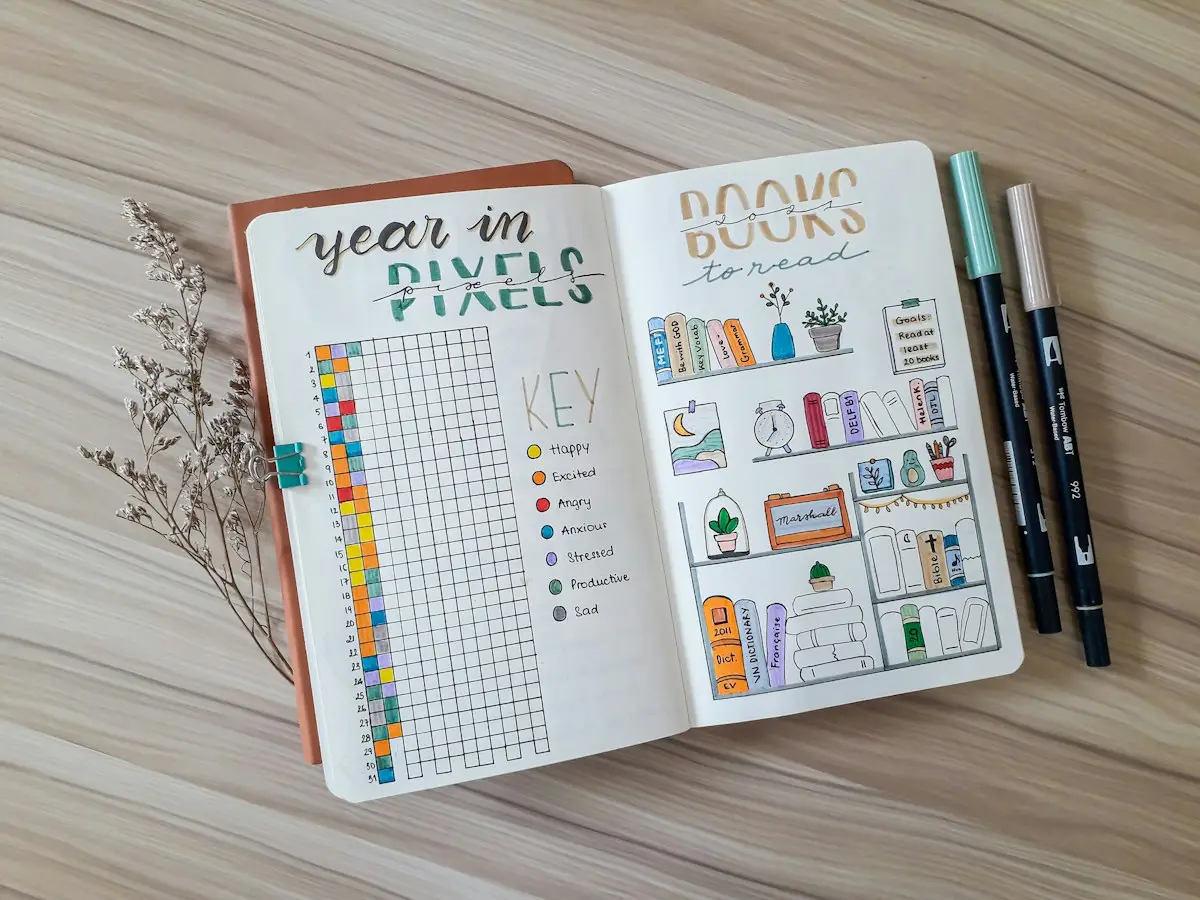
A paper calendar on the fridge with a tick for each day is enough. So is a note on your phone. The point is to see the pattern, not to build a spreadsheet.
8. Check in once a month
On the first Sunday of each month, ask three questions:
- What did I actually do?
- What got in the way?
- Should I make it smaller, change the time, or swap it for something else?
Changing a resolution isn’t quitting. Adjusting it to fit your real life is how it survives.
9. Tell one person
Not a social media announcement, just one friend or family member. Better yet, find someone with a similar goal and check in with each other once a week.
10. Start any day
January 1 often follows a late night. Starting on January 2, or the first Monday of the year, is perfectly fine. And if February goes badly, the first of March is a good day to start again.
Common reasons resolutions fail (and the fix)
- Too big: “Run a marathon” when you don’t run. Fix: “Walk-run for 20 minutes twice a week.”
- Too vague: “Be healthier.” Fix: pick one behavior you can see.
- No time set: “Meditate daily.” Fix: “Five minutes after I shower.”
- All or nothing: one bad week and it’s over. Fix: never miss twice.
- Somebody else’s goal: you’re doing it because you feel you should. Fix: choose something you actually want.
Need ideas?
See our list of 100 New Year’s resolution ideas you can actually keep, or put the area you want to work on and what’s in the way (a busy job, a tight budget, two kids) into our New Year’s Resolution Generator. It writes small, specific resolutions that fit around your life.
Frequently asked questions
Why do most New Year's resolutions fail?
Most are too big, too vague or depend on motivation that fades by February. Shrinking the goal and tying it to an existing routine fixes the most common causes.
How many New Year's resolutions should I make?
One to three is a sensible number, because each habit competes for the same limited attention. If you want more, start one and add the next after it feels automatic.
What should I do if I miss a day of my resolution?
Treat it as one missed day, not a failure, and get back to it the next day. Having a plan for the miss, such as a smaller version of the habit, keeps one slip from becoming a quit.
Do I have to start my resolution on January 1?
No. Any day works, and starting on an ordinary Tuesday is often easier than competing with the crowded first week of January.
How long does it take to build a new habit?
It varies by person and by habit, and there is no magic number of days. Simple habits attached to something you already do tend to stick sooner.